
Fresh seafood is one of the most visually demanding categories in any grocery department. Customers expect vibrant red tuna steaks, glistening salmon fillets, and snow‑white cod. Any sign of discoloration can immediately deter a purchase.
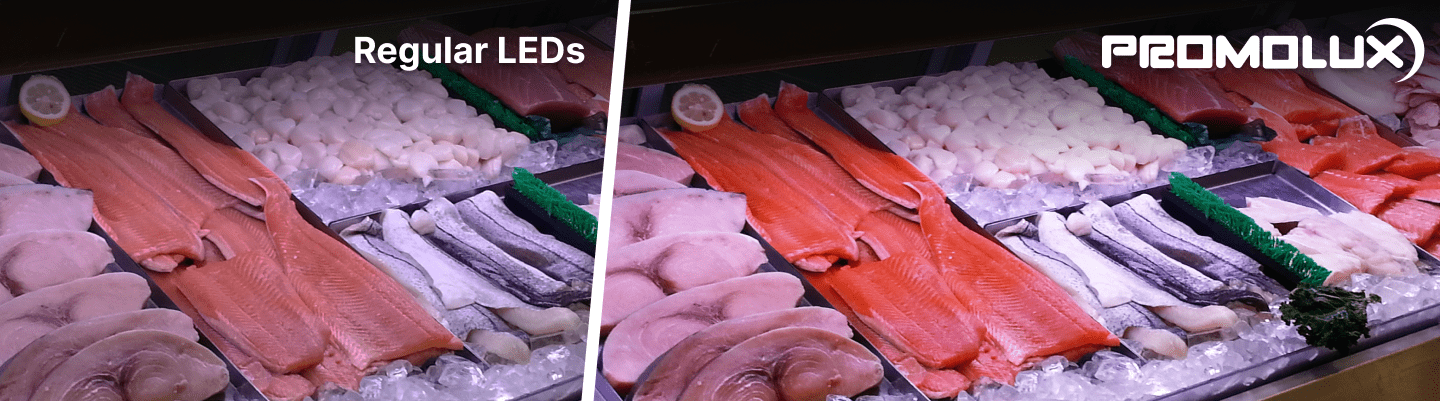
Yet even when handled properly and kept at ideal temperatures, fresh fish can lose its color and develop off‑flavors far too quickly. One of the biggest hidden culprits behind these quality issues? In‑case lighting.
Promolux SafeSpectrum™ LED lighting is engineered to address this challenge headon. By controlling harmful wavelengths, SafeSpectrum™ LEDs protect delicate pigments and lipids in fish, preserving visual appeal, taste, and nutritional quality.
Why Color Stability Matters in Seafood
Unlike packaged goods, fresh fish is sold based on immediate visual appeal. Shoppers often make their decision in seconds:
Bright salmon fillets suggest freshness and high omega‑3 content.
Glossy white cod or haddock signals premium quality.
Clear, vibrant skin on whole fish builds trust in the store’s standards.
When color fades or surfaces turn dull, customers assume the product is old even if it’s still perfectly safe.
Industry insight:
Studies show that over 60% of seafood shoppers rely primarily on color appearance when choosing fish.
- More frequent rewraps and markdowns.
- Higher shrink from unsold product.
- Lower overall sales and customer confidence.
How Standard Lighting Harms Fish Quality
Most supermarket seafood cases are illuminated by standard LEDs or fluorescent lamps chosen for brightness and efficiency. Unfortunately, many of these lights emit blue and violet wavelengths that are particularly damaging to seafood:
- Photo‑oxidation of pigments
Natural pigments like astaxanthin (responsible for salmon’s reddish hue) break down when exposed to high‑energy light.
This causes fading, patchy coloration, and reduced appeal. - Lipid oxidation in fatty fish
Omega‑3 rich species (salmon, mackerel, trout) are highly susceptible to oxidation.
Exposure to certain wavelengths accelerates rancid off‑flavors and shortens shelf life.
Result:
Even in refrigerated cases, color loss and off‑odors can develop within hours under harsh lighting.
The SafeSpectrum™ LED Difference
Promolux SafeSpectrum™ LEDs are designed specifically for food merchandising. Instead of simply maximizing brightness, they deliver a balanced light spectrum that filters out harmful wavelengths while still showcasing products beautifully.
Protects natural fish pigments:
Maintains the deep reds of tuna and salmon, the creamy whites of cod and halibut, and the vibrant skin tones of whole fish.
Reduces shrink and waste:
Extends display life so retailers can sell more products at full price.
Enhances shopper trust:
Consistent, attractive presentation communicates freshness and quality.
Outcome:
SafeSpectrum™ LEDs help fish counters look better, stay fresher, and perform more profitably.
Research Backing
University of Zaragoza (Spain):
Controlled studies demonstrated that perishable proteins including seafood exhibited significantly slower pigment degradation and lower oxidation markers when displayed under low‑UV, spectrum‑optimized lighting compared to standard store lights.
Texas A&M Department of Animal Science (USA):
Experiments on animal proteins under LED systems found that filtered, balanced lighting reduced lipid oxidation and extended display life, with sensory panels noting better color and aroma retention.
These scientific findings align with feedback from North American seafood departments:
“After switching to SafeSpectrum™ LEDs, our salmon fillets remain visually vibrant for over 24 hours longer, and customer complaints about odor have nearly disappeared.” Seafood Manager, Midwest Retail Chain
Proven Benefits in Seafood Departments
Extended Color Life: Fillets and whole fish maintain vibrant appearance longer, reducing early markdowns.
Improved Taste & Aroma: Slowed lipid oxidation keeps seafood tasting fresh.
Lower Shrink: Less product discarded due to appearance issues.
Implementation Tips for Seafood Cases
To fully optimize seafood displays, lighting should be part of a broader quality strategy:
Combine with proper refrigeration: Maintain stable low temperatures (ideally near 0°C / 32°F).
Use protective packaging where applicable: MAP films and trays can further shield products from oxygen and light.
Maintain cleanliness: Keep reflectors and light covers clean to ensure even illumination.
Monitor rotation: Pair better lighting with first‑in, first‑out inventory practices.
Sustainability and Brand Advantage
SafeSpectrum™ LEDs not only improve product quality but also support sustainability goals:
Reduced waste: Extended shelf life means fewer fish fillets discarded prematurely.
Energy efficient: SafeSpectrum™ LEDs offer efficiency comparable to standard LEDs with a far better impact on product integrity.
Customer loyalty: Shoppers trust stores that consistently provide seafood that looks and tastes fresh.
Final Thoughts
Lighting is a hidden factor that can make or break seafood quality. By switching to Promolux SafeSpectrum™ LED lighting, retailers can:
- Preserve vibrant color and fresh aroma in fish fillets and whole seafood.
- Minimize lipid oxidation and nutrient degradation.
- Reduce shrink and increase sales.
SafeSpectrum™ LEDs go beyond illumination they actively safeguard the quality of your seafood offerings and the reputation of your store.
Learn more about optimizing your seafood displays: www.safespectrum.com
References
- University of Zaragoza (Spain): Research on perishable proteins under low‑UV, balanced lighting demonstrated extended color stability and lower oxidation markers compared to standard lighting. (Promolux Technical Archive)
- Texas A&M Department of Animal Science (USA): Studies on meats and seafood under LED systems showed reduced lipid oxidation and improved sensory qualities versus traditional retail lighting. PubMed Abstract