
Protecting delicate marine proteins from light damage
Seafood is one of the most delicate product categories in food retail. Unlike many other proteins, fish and shellfish contain high levels of highly unsaturated fats that are chemically sensitive to environmental conditions. While temperature control and proper handling are widely recognized as essential to maintaining seafood quality, lighting is another critical factor that often receives less attention.
Improper display lighting can accelerate oxidation reactions in seafood, leading to off-flavors, discoloration, and reduced nutritional quality. By understanding how light affects seafood stability, retailers and foodservice operators can make better choices about the lighting systems used in seafood display cases.
Why Seafood Is Highly Sensitive to Light
Seafood products are particularly vulnerable to oxidation reactions because they contain significant amounts of polyunsaturated fatty acids, especially omega-3 fatty acids. These fats are nutritionally valuable and widely promoted for their health benefits, but they are also chemically unstable when exposed to oxygen and certain wavelengths of light.
When seafood is displayed under bright lighting for extended periods, light energy can trigger oxidation reactions within these fats. Over time, this process breaks down the lipid molecules and produces compounds responsible for unpleasant flavors and odors.
Because seafood is typically displayed on ice in open display cases for many hours each day, the combined effects of light, oxygen, and temperature fluctuations can accelerate quality deterioration if lighting is not carefully managed.
Lipid Oxidation in Marine Foods
Fish and shellfish are particularly prone to lipid oxidation, a chemical reaction that occurs when unsaturated fats interact with oxygen. Light exposure can initiate and accelerate this reaction by activating photosensitive compounds naturally present in seafood.
Once oxidation begins, a chain reaction develops that gradually degrades the fats in the product.
Common consequences of lipid oxidation include:
- rancid or metallic flavors
- unpleasant or fishy odors
- discoloration or dulling of natural seafood color
- reduced nutritional value as omega-3 fats degrade
- shorter shelf life and increased product waste
For retailers, these effects not only reduce product quality but can also negatively influence customer perception and purchasing decisions.
The Role of Light Spectrum
Not all light affects seafood in the same way. Certain wavelengths within the visible light spectrum can accelerate oxidation reactions more than others. In particular, shorter wavelengths such as blue and ultraviolet light carry higher energy levels that can initiate chemical reactions within sensitive fats and pigments.
Traditional display lighting systems often emit a broad light spectrum that includes these damaging wavelengths. Over time, constant exposure can contribute to faster product degradation.
By reducing or filtering out the wavelengths most responsible for oxidation, lighting systems can help slow these reactions and maintain seafood quality for longer periods.
Promolux Lighting Advantages
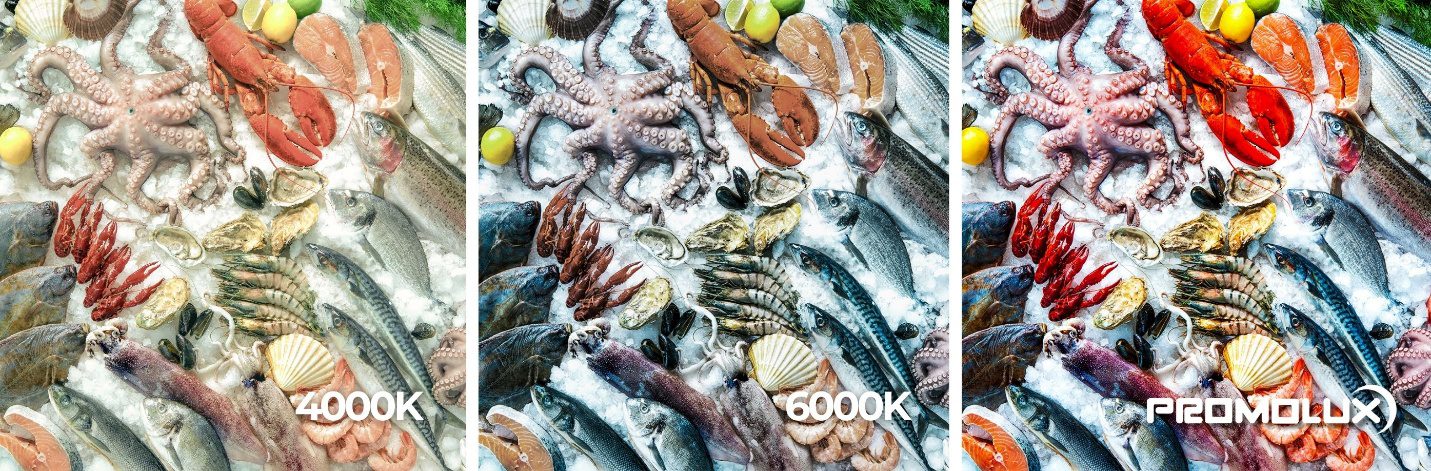
Lighting solutions specifically designed for food displays can play an important role in protecting seafood quality. Promolux LED lighting is engineered to reduce the emission of harmful wavelengths that accelerate oxidation reactions while still providing bright, natural-looking illumination.
Another important advantage is low heat emission. Traditional lighting systems can generate heat that contributes to temperature fluctuations in refrigerated display cases. Promolux LEDs produce minimal heat, helping maintain a more stable environment for delicate seafood products.
Key benefits of Promolux lighting for seafood displays include:
- extended seafood shelf life
- improved color retention and product appearance
- reduced odor formation from lipid breakdown
- better preservation of omega-3 nutritional value
- lower product shrink and waste for retailers
By carefully controlling both spectrum and heat output, these lighting systems help create a display environment that supports both product quality and visual appeal.
Conclusion
Seafood products require carefully controlled display conditions to maintain their freshness, flavor, and nutritional value. While refrigeration and proper handling remain essential, lighting is an important environmental factor that can significantly influence seafood stability.
By using lighting systems designed to reduce oxidation-causing wavelengths—such as Promolux LED solutions—retailers can help protect delicate marine proteins from light-induced damage. The result is longer-lasting freshness, better product presentation, and reduced waste throughout the seafood department.