
Light as a Catalyst for Chemical Reactions
Lighting systems provide energy that can accelerate chemical reactions within food. Photochemical reactions triggered by light can cause pigment degradation, lipid oxidation, and nutrient loss.
These reactions may occur gradually but can significantly affect food quality during retail display.
Examples of light-induced changes include:
- browning of fresh meat
- fading of leafy vegetables
- oxidation of seafood fats
- nutrient loss in dairy products
By incorporating lighting conditions into shelf life models, researchers can better predict how display environments influence food quality.
Spectral Influence on Reaction Rates
The wavelength of light emitted by display lighting systems determines how much energy is available to drive chemical reactions. High-energy wavelengths are more likely to initiate oxidation reactions in foods.
When foods are exposed to full-spectrum lighting systems, the presence of these wavelengths increases the rate of deterioration. Reducing exposure to harmful wavelengths can therefore slow the reactions responsible for quality loss.
Promolux LEDs and Shelf Life Extension
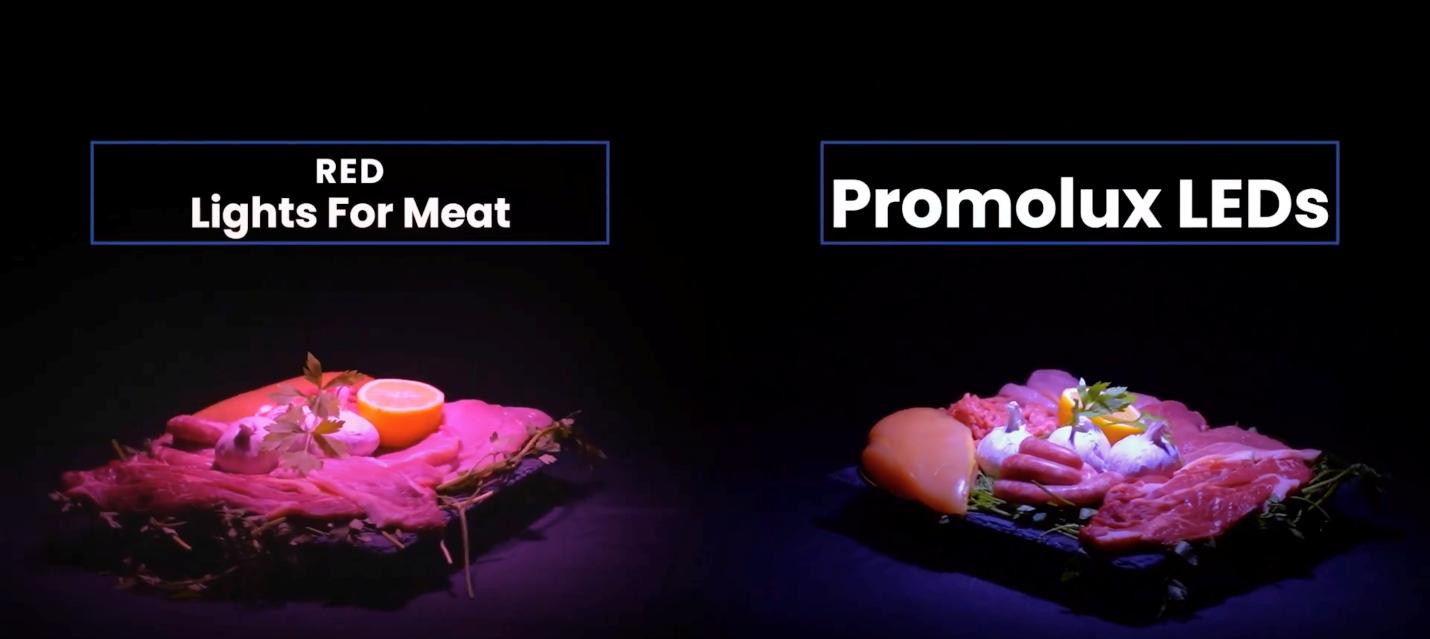
Promolux LED lighting systems are designed to reduce wavelengths that accelerate food deterioration. By controlling spectral output, these lighting systems reduce the energy available for photochemical reactions.
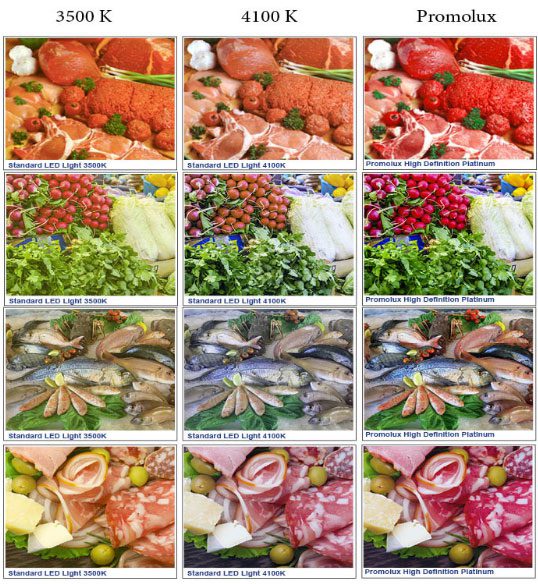
This controlled spectrum approach has been shown to extend the shelf life of many fresh foods displayed in grocery stores. Slower oxidation reactions allow products to retain their color, texture, and flavor for longer periods.
Thermal Stability and Shelf Life
Heat is another factor that influences reaction rates. Chemical reactions occur more quickly at higher temperatures. Lighting systems that generate heat can therefore accelerate food deterioration even in refrigerated displays.
Promolux LEDs produce minimal heat compared with traditional lighting technologies. Lower heat emission helps maintain stable temperatures in display cases, which slows both chemical reactions and microbial growth.
Retail Implications
Improving shelf life through optimized lighting provides significant advantages for grocery retailers.
Benefits include:
- longer display times for fresh foods
- reduced product shrinkage
- improved inventory management
- increased customer confidence in product freshness
These improvements contribute to both operational efficiency and sustainability.
Conclusion
Shelf life modeling demonstrates that lighting conditions play a critical role in determining how long fresh foods remain marketable. By reducing harmful wavelengths and minimizing heat emission, Promolux LED lighting systems help extend the shelf life of perishable foods. This scientifically engineered approach supports better food preservation and reduced waste in retail environments.