
Fresh tuna and salmon are centerpieces of any seafood department. Their vibrant colors and rich omega‑3 content make them premium items that shoppers seek out for special meals and healthy diets.
But these high‑value products are also highly vulnerable: even when stored at proper temperatures, they can lose color, develop off‑flavors, and show signs of spoilage far too soon.
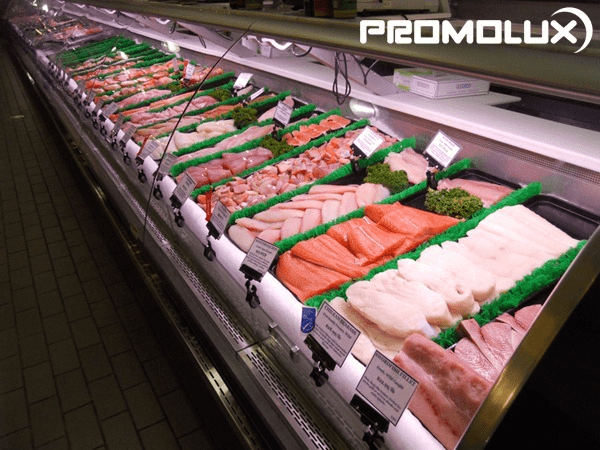
Promolux SafeSpectrum™ LED technology was developed to solve this challenge. By controlling the light spectrum, it preserves color, protects delicate lipids, and helps retailers sell more premium seafood with less waste.
Why Tuna and Salmon Are Prone to Lipid Oxidation
Unlike lean white fish, tuna and salmon are prized for their high omega‑3 fat content.
These polyunsaturated fats are incredibly healthy but also highly reactive.
When exposed to oxygen and harsh lighting, these lipids begin to break down:
- Peroxides and aldehydes form, producing rancid aromas and off‑flavors.
- Pigments such as astaxanthin (responsible for salmon’s deep red-orange hue)
degrade, leading to a dull or uneven appearance.
Industry Insight:
Research shows that customers make purchase decisions in seconds, with color and appearance as their top criteria.
For high‑value fillets like tuna and salmon, poor lighting can result in:
- Early markdowns due to fading color.
- Increased shrink from unsold portions.
- Lost customer confidence in the seafood department.
How Standard Lighting Accelerates Spoilage
Most seafood cases use standard LEDs or fluorescent lamps chosen for brightness and energy efficiency. Unfortunately, many of these lights emit high levels of short‑wavelength blue and violet light.
These wavelengths initiate two damaging reactions in fatty fish:
- Photo‑oxidation of pigments
Astaxanthin and other natural pigments absorb high‑energy light, breaking down into compounds that make the fish look pale or brownish. - Lipid oxidation in omega‑3 rich tissue
Unsaturated fats react with light‑activated oxygen, forming compounds that create off‑odors and shorten shelf life.
Result:
Even in well‑refrigerated cases, tuna and salmon can start losing their vibrant color and fresh taste within hours under standard lighting.
How SafeSpectrum™ LEDs Solve the Problem
SafeSpectrum™ LED technology by Promolux was engineered specifically for food merchandising.
Instead of focusing solely on brightness, these LEDs use a balanced light spectrum that filters out the most harmful wavelengths while still making seafood look its best.
Protects natural pigments:
Maintains the deep reds of tuna and the bright orange-pink of salmon.
Slows lipid oxidation:
Preserves omega‑3 fatty acids, preventing rancid notes and extending flavor quality.
Reduces shrink:
Extended display life means fewer markdowns and less waste.
Enhances shopper trust:
Consistent, vibrant presentation communicates freshness and premium value.
Outcome:
A lighting system that actively contributes to longer shelf life and stronger sales.
Research Support Behind SafeSpectrum™ LEDs
Scientific studies back up the value of controlling light exposure in seafood and other meats:
University of Zaragoza (Spain):
Research on perishable proteins including seafood showed that products displayed under a low‑UV, spectrum‑optimized light retained their natural color for more than 24 hours longer than those under standard lighting. Oxidation markers (such as TBARS values) were significantly lower, confirming slower lipid degradation.
Texas A&M Department of Animal Science (USA):
Controlled experiments comparing LED systems found that meats and seafood displayed under filtered, spectrum‑tuned lighting developed rancid flavors and pigment oxidation far more slowly than those exposed to conventional LEDs or fluorescent lamps.
Retail feedback:
Seafood managers in North America have reported that salmon fillets and tuna steaks maintain market‑ready appearance and aroma much longer under SafeSpectrum™ LEDs.
“We’ve seen up to a full extra day of bright color in our tuna loins since upgrading to SafeSpectrum™ lighting, with noticeably fewer customer complaints.” Seafood Department Manager, Western U.S.
Proven Benefits in Tuna & Salmon Displays
Retailers using SafeSpectrum™ LEDs in seafood cases consistently report:
- Extended color life: Fillets retain vibrant red/orange hues longer, reducing early markdowns.
- Improved flavor integrity: Slowed oxidation keeps fish tasting fresh.
- Reduced waste: Less shrink from product pulled before sell‑by dates.
- Operational efficiency: Staff spend less time on rewraps and product rotation.
Implementation Tips for Seafood Departments
To maximize the benefits of SafeSpectrum™ LEDs in tuna and salmon displays, combine lighting improvements with best practices:
Refrigeration: Maintain case temperatures close to 0 °C (32 °F).
Packaging: Use protective trays or films (like MAP) to further shield from oxygen and light.
Clean reflectors and shields: Ensure lighting fixtures stay free of dust for consistent illumination.
Inventory rotation: Pair better lighting with first‑in, first‑out stocking.
Sustainability and Brand Impact
SafeSpectrum™ LEDs support both product quality and sustainability goals:
Reduced waste: Longer shelf life means fewer fillets discarded prematurely.
Energy‑efficient: Comparable energy use to standard LEDs with far greater product protection.
Customer loyalty: Shoppers associate consistent quality with a trustworthy brand.
Final Thoughts
Lighting can make or break the quality of premium seafood. By adopting Promolux SafeSpectrum™ LED technology, retailers can:
Maintain vibrant color in tuna and salmon.
Minimize lipid oxidation and protect delicate omega‑3s.
Reduce shrink and enhance merchandising results.
SafeSpectrum™ LEDs go beyond illumination they actively protect the freshness your customers expect and the reputation your store deserves.
Learn more about optimizing your seafood displays: www.safespectrum.com