
The role of spectral engineering in preserving delicate marine nutrients
Why Seafood Requires Specialized Display Lighting
Seafood products are among the most nutritionally valuable foods available to consumers. Fish and shellfish provide essential nutrients such as omega-3 fatty acids, high-quality protein, vitamins, and minerals. However, seafood is also extremely sensitive to environmental conditions during storage and display. Exposure to oxygen, temperature fluctuations, and light can accelerate chemical reactions that degrade seafood quality. For this reason, the design of seafood display lighting systems is an important factor in preserving product freshness and nutritional value.
Unlike many other foods, seafood contains high concentrations of polyunsaturated fatty acids. These molecules are chemically unstable and easily damaged by oxidation. When seafood is exposed to light, the energy absorbed by certain compounds can trigger oxidation reactions that break down these delicate fats.
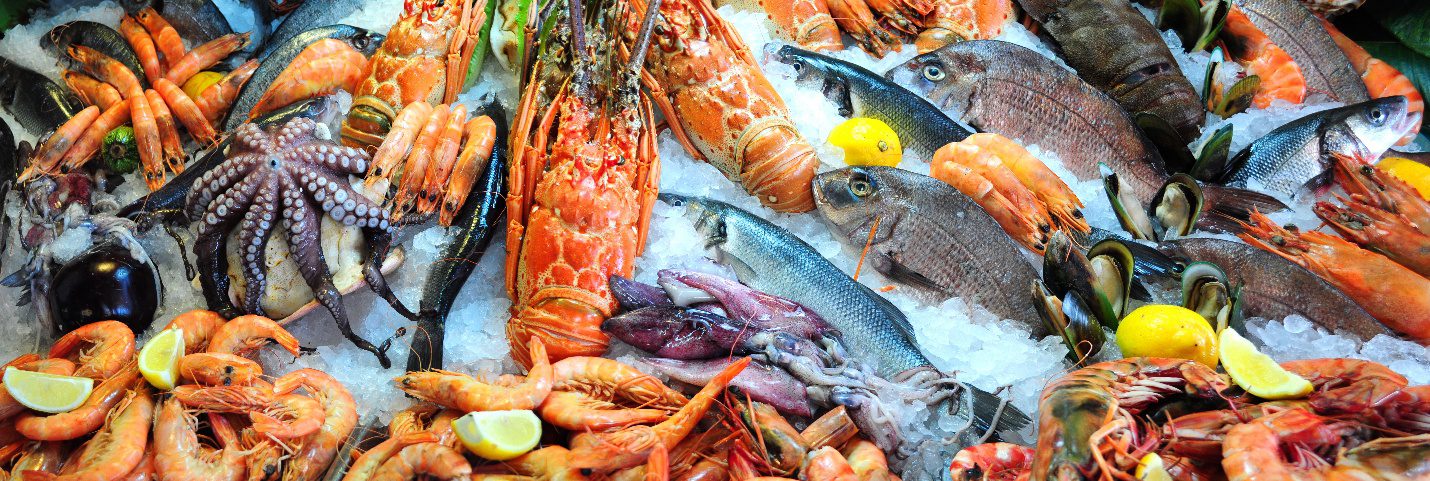
Lipid Oxidation in Marine Foods
The oxidation of fats in seafood is known as lipid oxidation, and it is one of the primary causes of seafood spoilage. During this process, oxygen reacts with unsaturated fatty acids, producing compounds that contribute to unpleasant odors and flavors. Lipid oxidation can also cause color changes and reduce the nutritional value of seafood products.
Several factors can accelerate lipid oxidation in seafood, including:
- exposure to oxygen
- elevated temperatures
- light exposure
- mechanical damage to tissues
Among these factors, lighting conditions are often overlooked. However, continuous illumination in retail environments can provide the energy necessary to initiate oxidation reactions.
Light-Induced Oxidation and Seafood Quality
When seafood is displayed under conventional lighting systems, photons from the light source can activate photosensitizing compounds within the fish tissue. These compounds transfer energy to oxygen molecules, producing reactive oxygen species that attack fatty acids.
This process leads to the formation of oxidation byproducts that cause:
- rancid odors
- bitter flavors
- discoloration
- reduced nutritional value
Because seafood is often displayed on ice under bright lights, the exposure time can be significant, making lighting an important factor in seafood preservation.
Promolux LEDs and the Protection of Omega-3 Fatty Acids
Promolux LED lighting technology was developed to minimize the impact of light on food quality. By controlling the wavelengths emitted by the lighting system, Promolux LEDs reduce the energy available to trigger oxidation reactions.
This controlled spectrum approach helps protect delicate marine nutrients such as omega-3 fatty acids. When seafood is displayed under Promolux lighting, the reduced exposure to damaging wavelengths slows lipid oxidation and helps maintain the natural flavor and aroma of the product.
Thermal Management and Seafood Preservation
In addition to spectral control, Promolux LED lighting systems produce significantly less heat than traditional lighting technologies. This is particularly important for seafood displays because even small temperature increases can accelerate spoilage reactions.
Lower heat emission helps maintain stable refrigeration temperatures, which slows microbial growth and chemical reactions. By combining spectral engineering with thermal efficiency, Promolux LEDs provide a display environment that supports seafood preservation.
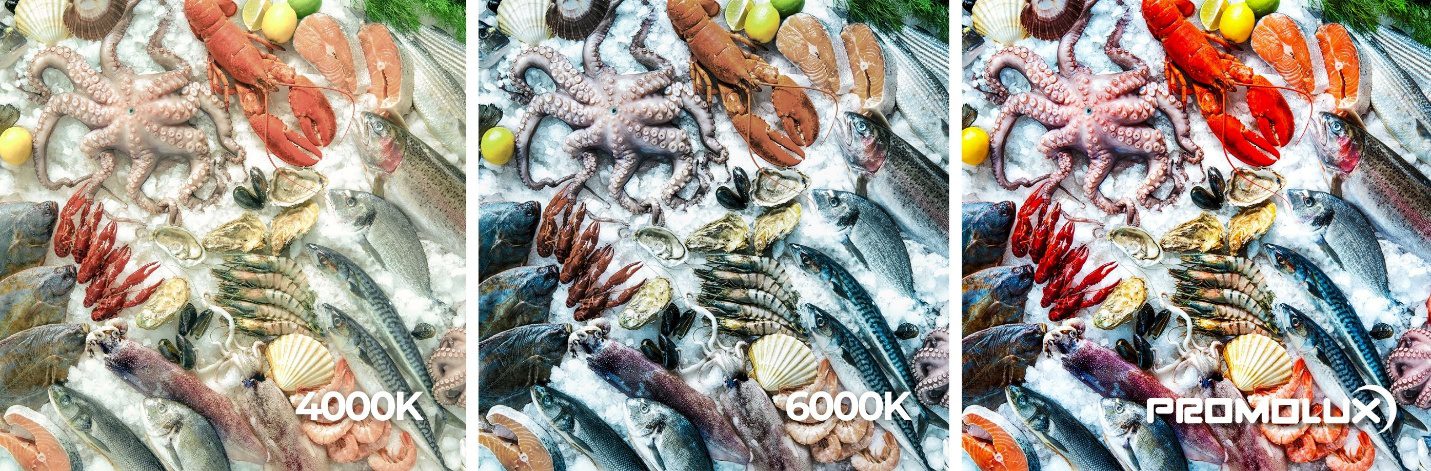
Benefits for Seafood Retailers
Retailers who use food-specific lighting systems can achieve several improvements in seafood quality and sales performance.
Benefits include:
- improved color retention in fish fillets
- slower development of off-odors
- longer shelf life for seafood products
- reduced waste due to spoilage
- improved consumer perception of freshness
These advantages demonstrate that lighting technology plays a crucial role in seafood merchandising.
Conclusion
Seafood products require carefully controlled display conditions to maintain their nutritional value and sensory quality. Light exposure can accelerate lipid oxidation, leading to flavor deterioration and reduced shelf life. Promolux Safe Spectrum LED technology reduces the wavelengths responsible for triggering oxidation reactions while minimizing heat emission. Through this scientifically engineered approach, retailers can protect delicate marine nutrients and deliver higher-quality seafood to consumers.