
Seafood is among the most sensitive and high‑value products in any grocery department. Customers expect vibrant fillets, fresh aroma, and appealing texture. Yet maintaining these qualities from the moment fish is displayed until the moment it is sold is a constant challenge.
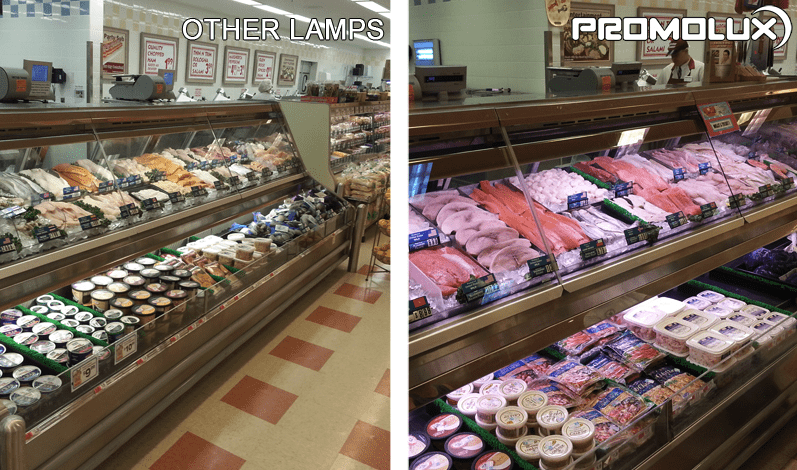
Even under ideal refrigeration, lighting in display cases plays a critical but often overlooked role in seafood shelf life. Harsh wavelengths accelerate color loss and lipid oxidation, leading to dull appearance, off‑flavors, and reduced sales.
Promolux SafeSpectrum™ LED lighting is engineered to solve these problems. By using a balanced spectrum that filters harmful light bands, it actively supports longer shelf life, better flavor retention, and a more profitable seafood department.
Why Lighting Affects Seafood Shelf Life
Fish and shellfish contain high levels of unsaturated fats and delicate pigments such as astaxanthin and carotenoids. These compounds are responsible for the attractive red hues in salmon or the bright sheen of fresh fillets. Unfortunately, they are also highly reactive when exposed to certain light wavelengths:
- Blue and violet light trigger oxidative reactions.
- UV components accelerate pigment breakdown and nutrient loss.
Insight:
Research on fish lipids shows that even brief exposure to intense lighting can initiate oxidation, forming compounds that produce rancid odors and reduce nutritional value.
For retailers, the result is clear:
Higher shrink from unsold product
More markdowns and rewraps
Lower customer confidence in freshness
How Standard Lighting Shortens Seafood Shelf Life
Many supermarket cases still use fluorescent tubes or generic LEDs designed for brightness rather than food preservation. While they make products visible, they also emit high‑energy light that causes:
- Pigment degradation
- Natural reds and pinks fade, making fillets appear older than they are.
- Whole fish lose their glossy skin appearance.
- Lipid oxidation
- Omega‑3‑rich fish like salmon and mackerel develop peroxides and aldehydes.
- Off‑flavors and odors occur long before microbial spoilage.
Even perfectly chilled seafood can lose its appeal and shelf life due to inappropriate lighting.
The SafeSpectrum™ LED Difference
Promolux SafeSpectrum™ LED lighting takes a completely different approach. Instead of simply maximizing lumens, it delivers a custom‑balanced spectrum designed for food displays:
- Minimizes damaging wavelengths: Filters out UV and excessive blue/violet emissions.
- Protects color integrity: Maintains natural vibrant hues in salmon, trout, cod, and shellfish.
- Slows lipid oxidation: Preserves delicate omega‑3 fats, keeping flavor clean and aroma fresh.
- Reduces shrink and waste: Longer display life means more sales at full price.
Outcome:
Seafood remains visually appealing and flavorful longer, helping retailers build a reputation for premium quality.
Research Support Behind SafeSpectrum™ LEDs
Here are different studies from your list directly supporting the benefits of optimized lighting on seafood:
Kim et al., 2019 Impact of light source on color stability and lipid oxidation of rainbow trout fillets
Tests on trout fillets revealed that those placed under LED illumination maintained their fresh appearance and experienced less pigment breakdown and oxidation than samples exposed to fluorescent lighting.
(DOI: 10.1016/j.foodchem.2019.01.066)
Wang et al., 2019 Effects of lighting on egg yolk lipid oxidation
While focused on egg yolks, this study demonstrated that visible light accelerates lipid oxidation in high‑fat food products. Findings are relevant to seafood with similar lipid profiles.
(DOI: 10.3382/ps/pey557)
Together, these studies show that controlling light exposure and spectrum is a proven strategy to extend shelf life and maintain sensory quality in seafood and other perishable products.
Proven Benefits in Seafood Departments
- Extended Shelf Life: Fillets stay visually vibrant and marketable for additional hours or days.
- Better Flavor & Aroma: Slower oxidation reduces rancidity in high‑fat fish.
- Lower Shrink: Less product discarded due to appearance issues.
- Customer Confidence: Shoppers perceive consistently high quality, leading to repeat business.
“Since switching to SafeSpectrum™ LEDs, our seafood counters look fresher all day, and we’ve seen a noticeable drop in product shrink.” Operations Manager, East Coast Retailer
Implementation Tips
Lighting is only one part of a successful seafood merchandising strategy. To maximize the benefits:
Refrigeration: Maintain case temperatures near 0 °C (32 °F).
Protective Packaging: Use MAP or vacuum packs for smoked or delicate fish.
Clean Fixtures: Regularly clean light covers and reflectors for consistent illumination.
Rotation: Combine superior lighting with first‑in, first‑out practices.
Sustainability and Brand Advantage
Energy efficiency: Comparable to standard LEDs while protecting product integrity.
Brand reputation: Customers trust stores that consistently deliver fresh, attractive seafood.
Final Thoughts
Lighting can be the hidden factor that determines whether your seafood section thrives or struggles. By upgrading to Promolux SafeSpectrum™ LED lighting, retailers can:
Slow oxidation and nutrient degradation, maintaining peak quality.
Reduce waste, improve margins, and strengthen customer loyalty.
SafeSpectrum™ LEDs are more than lights they’re a tool for better seafood shelf life management.
Learn more about optimizing seafood displays: www.safespectrum.com
References
- Kim, Y. et al. (2019). Impact of light source on color stability and lipid oxidation of rainbow trout fillets during display. Food Chemistry.
ScienceDirect Abstract - Wang, X. et al. (2019). Effects of lighting on egg yolk lipid oxidation. Poultry Science.
PubMed Abstract